E-ABLE POWER / SOLAR LIGHTING

SunBeamAll-In-Two Solar

SunBeam all-in-two solar street light pairing a flexible panel mount with a high-capacity battery for steady nightly output. Independent panel angle and integrated LED head simplify service.

E-ABLE POWER — PRODUCT DATASHEET
MUNICIPAL SOLAR LIGHTING SOLUTIONS
ALL-IN-TWO DESIGN     190 LM/W     PROJECT CONFIGURABLE

SunBeam Series | Integrated All-in-Two System

SunBeam All-in-Two Solar Street Light

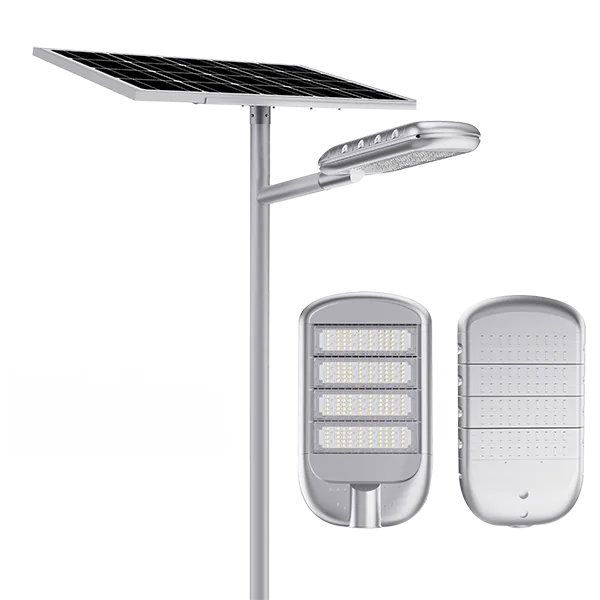
The sweet spot between all-in-one simplicity and split-type flexibility. SunBeam is a 60W–120W all-in-two solar street light that pairs a separately adjustable monocrystalline solar panel with an integrated lamp head housing the Philips LED array, LiFePO4 lithium battery, and MPPT charge controller — delivering 190LM/W high-efficacy lighting with fast, clean, trench-free on-site deployment. The semi-integrated architecture lets you independently aim the solar panel toward the sun (regardless of road direction) to recover 20–40% more annual energy than a fixed all-in-one unit, while the sealed IP66 luminaire keeps the battery and controller off the ground for wind-resistant, maintenance-free off-grid solar lighting. Fully configurable for municipal roads, highways, rural village roads, parking lots, parks, campus and compound lighting, and backed by OEM/ODM, DIALux photometric simulation and free project sizing — the ideal choice for distributors and project engineers installing solar LED street lighting.

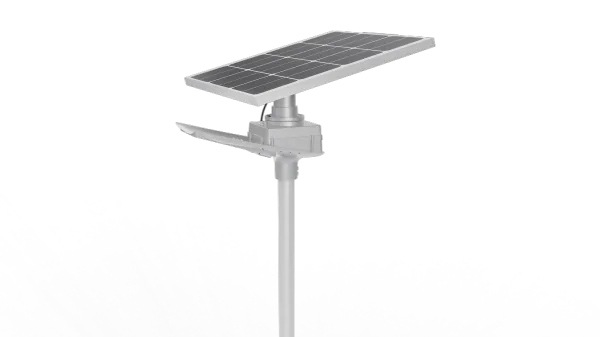
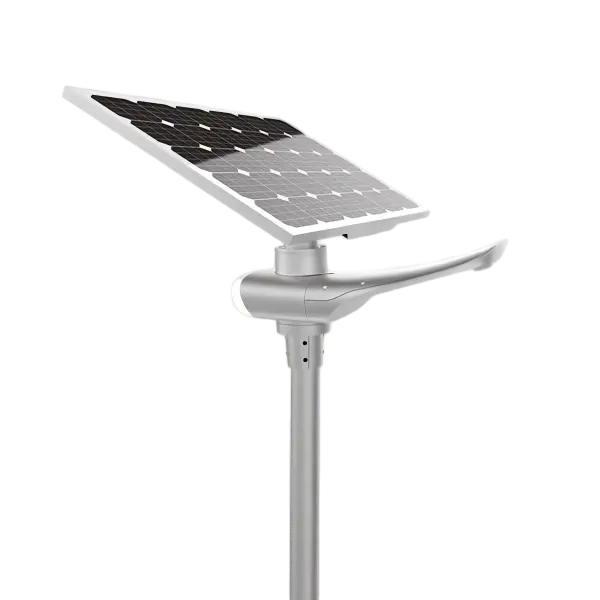
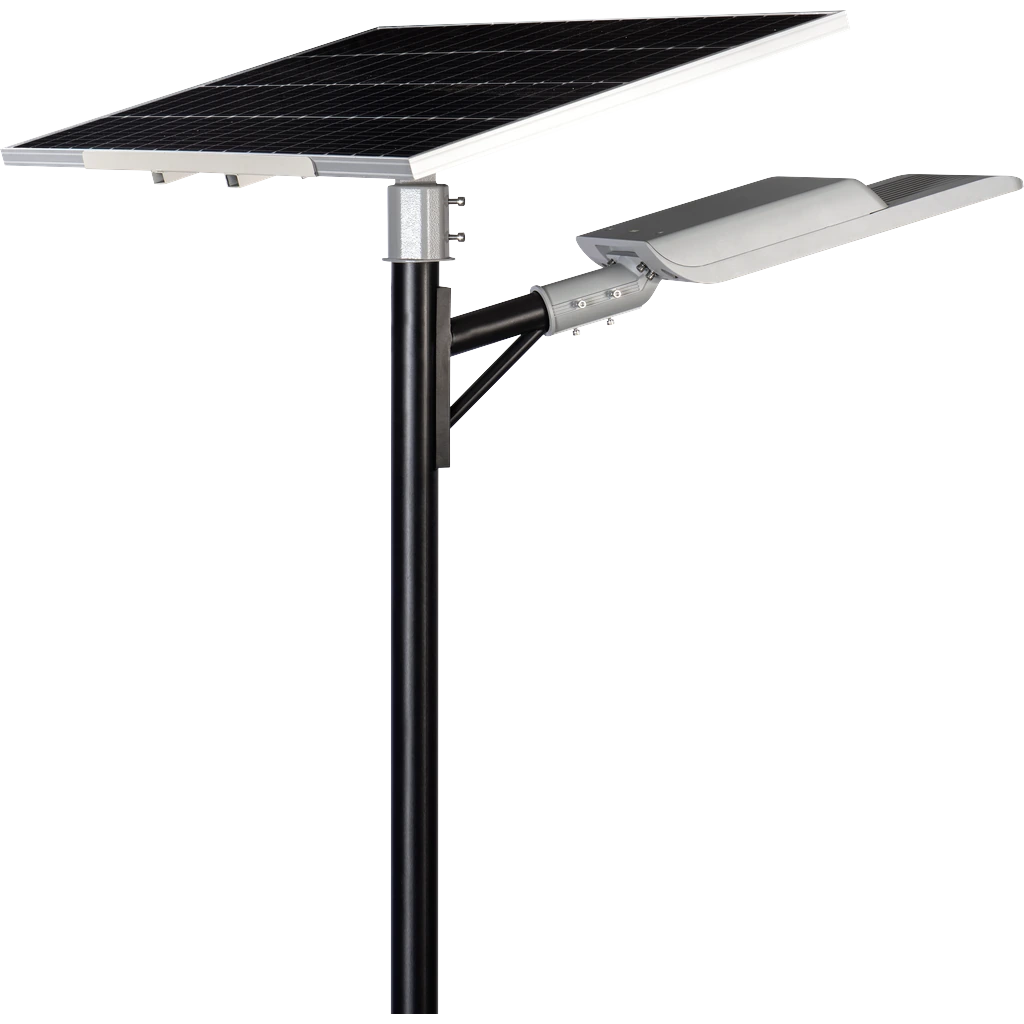
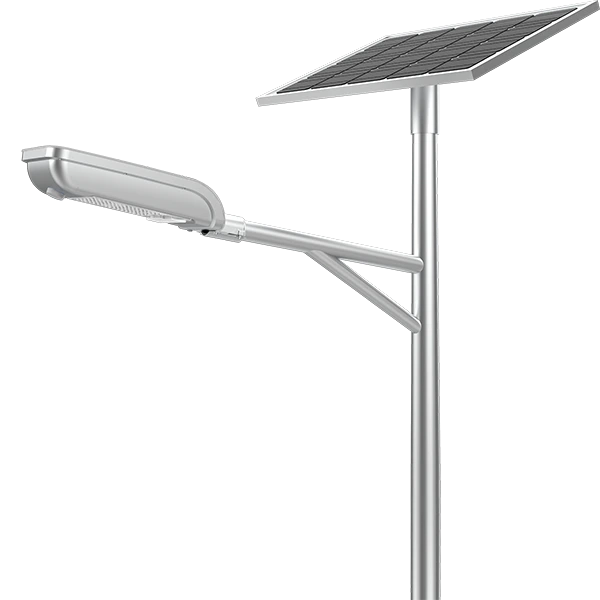
A solar street light with a panel on top and a pole, alongside front and back views of the light head.

Key Specifications at a Glance

ArchitectureAll-in-Two (Semi-Integrated)LED Range60W – 120W Configurable
Efficacy190 lm/W — Philips LED ChipsSolar PanelAdjustable Monocrystalline (Separate)
BatteryIntegrated LiFePO4 — Smart BMSControllerMPPT — Programmable Dimming
Ingress ProtectionIP66 Waterproof & DustproofInstallationClean Layout — Battery in Lamp Head
CertificationsCE / RoHS / ISO9001 / ISO14001Warranty3 Years

What Is All-in-Two? The Best of Both Worlds

All-in-Two architecture occupies the sweet spot between fully integrated all-in-one fixtures and fully separated split systems:

vs All-in-One: Separate panel enables independent solar orientation — the panel faces south (optimal) while the road runs any direction. No compromise on energy harvest.     vs Fully Split: Battery and controller are integrated in the lamp head — no separate ground-level battery box, no external controller wiring. Cleaner install, fewer components to manage on site.     Result: The flexibility of split solar orientation + the installation simplicity of integrated storage. Ideal for roads where panel direction ≠ road direction but site complexity must be minimized.

Engineering Advantages

Independent Solar Alignment

The separate PV panel mounts on an adjustable bracket with full tilt and azimuth control. Point the panel due south (Northern Hemisphere) at the ideal angle regardless of road orientation — recovering 20-40% of annual energy that a fixed-direction all-in-one would lose on east-west roads.

Clean Integrated Lamp Module

The lamp head combines the 190LM/W Philips LED array, LiFePO4 battery with Smart BMS, and MPPT controller into one IP66-sealed enclosure. No separate battery box at the pole base, no external controller wiring — just one clean luminaire on the pole arm. This dramatically simplifies installation logistics.

Faster Deployment vs Fully Split

Compared to a fully split system (separate panel + luminaire + battery box + controller box), SunBeam reduces on-site component count by 2-3 units per pole. Two main assemblies (panel bracket + lamp head) vs four — meaning faster per-pole installation, fewer cable connections to weatherproof, and reduced commissioning time.

Reference Configuration

Reference for project planning. Final wattage, solar panel, battery, controller, pole, and installation layout confirmed per site-specific solar audit and structural review.
Parameter Reference Value
System Architecture All-in-Two — Separate PV panel + Integrated lamp head (LED + LiFePO4 + Controller)
LED Efficacy 190 lm/W — Philips 5050 SMD Chip Array
Power Range 60W – 120W Configurable — Models YP-150 / YP-200
Typical Applications Municipal roads, public spaces, commercial access roads, parking lots, community infrastructure
Certifications CE / RoHS / ISO9001 / ISO14001 — 3-Year Warranty

Project Planning — Input Checklist

Project Input What to Confirm
Road Specifications Road width, lane count, pole spacing, mounting height, required lux level
Location & Climate GPS coordinates — sun hours, rainy season, temperature range, wind, corrosion exposure
Operating Schedule Nightly lighting hours, dimming profile, autonomy target, motion sensor requirement
Installation Scope Foundation design, cable routing, local permits, commissioning, quantity, timeline

Project & Product Gallery

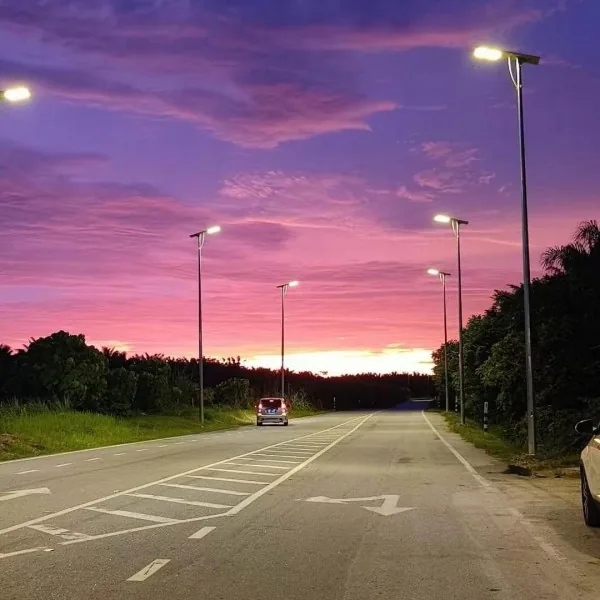
A wide road with solar-powered street lights on both sides under a dramatic purple and pink sunset sky.     Malaysia Project
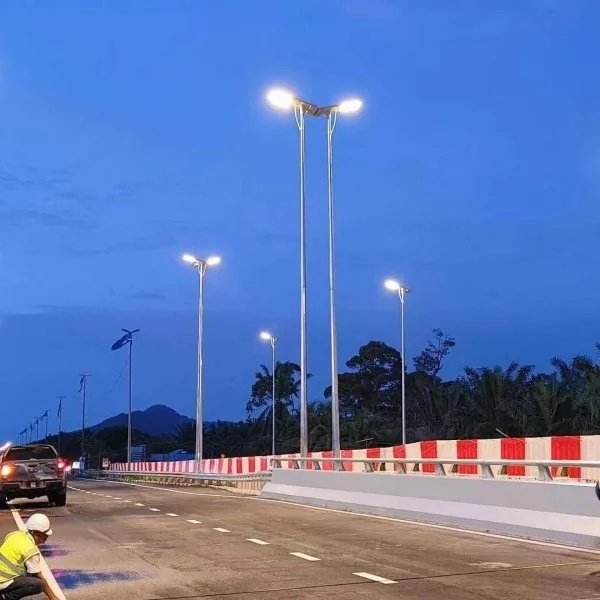
A newly constructed road at dusk features tall dual-headed solar street lights, red and white barriers, and a worker in the foreground.     Road Installation
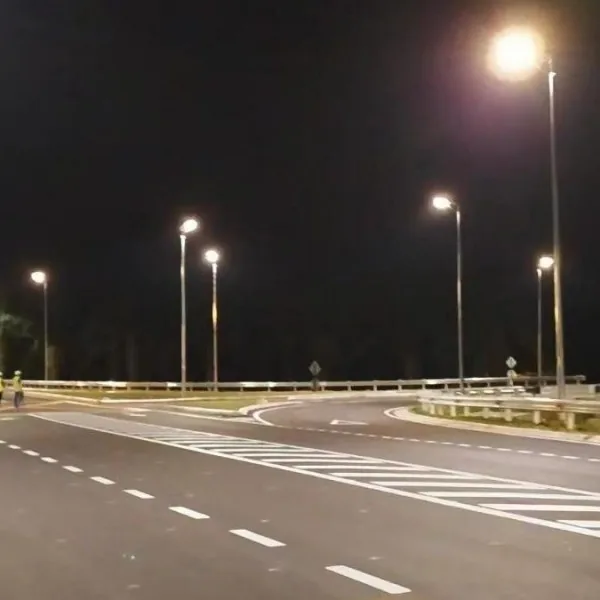
A nighttime view of an empty curved road illuminated by several tall streetlights.     System Close-up
    Component Detail

SunBeam Frequently Asked Questions

What exactly is an all-in-two solar street light?
All-in-Two means the system splits into two main assemblies: (1) the separate adjustable solar panel, and (2) the integrated lamp head containing the LED array, LiFePO4 battery, and MPPT controller. This design gives you the panel orientation flexibility of a split system (point the panel south regardless of road direction) while keeping installation simpler than a fully split system (no separate ground-level battery box or external controller to wire). It’s the ideal middle ground — especially for roads where the optimal panel direction differs from the road alignment.
When should I choose SunBeam over a fully split or all-in-one system?
Choose SunBeam when: (1) Your road orientation means the solar panel needs to face a different direction than the luminaire — but you don’t want the complexity of a 4-component split system. (2) You need output in the 60W–120W range — higher than most all-in-ones support but you want cleaner installation than a full split. (3) Site access is limited and minimizing on-site component count reduces labour cost and commissioning time. If you need >120W LED or the battery must sit at ground level for extreme cold, a fully split system may be better; if optimal panel direction = road direction and you’re under 80W, an all-in-one may suffice.
Are the Malaysia project photos representative of every installation?
The gallery photos show real deployed SunBeam installations in Malaysia — they are actual project references, not renderings. However, every installation is site-configured: pole height, panel wattage, battery capacity, and LED output are sized specifically for each project’s road dimensions, solar resource, and lighting requirements. The photos demonstrate build quality, form factor, and real-world deployment — but your specific configuration will be tailored. We provide a DIALux simulation showing the exact pole layout and lux distribution for your road before you order.

Explore Related Solar Lighting Solutions

Plan your SunBeam All in Two Solar Power Street Light project.

Send your site conditions, lighting requirements or load profile for a system engineered to your location — DIALux simulation, sizing and pricing within 2–3 business days.