
Downloads
Print-ready PDF — specifications and installation in one place, no login required.
Key features
- 8 kW continuous output at 120/240 Vac split-phase, 12 kVA apparent power
- 1.5× rated overload for 10 s to carry pump and compressor starting current
- Two MPPT inputs, 5 kW + 5 kW PV at 18 A + 18 A
- 150 A maximum continuous bypass current for grid-side circuits
- Single battery input, 40–58.6 Vdc, 160 A charge and 180 A discharge
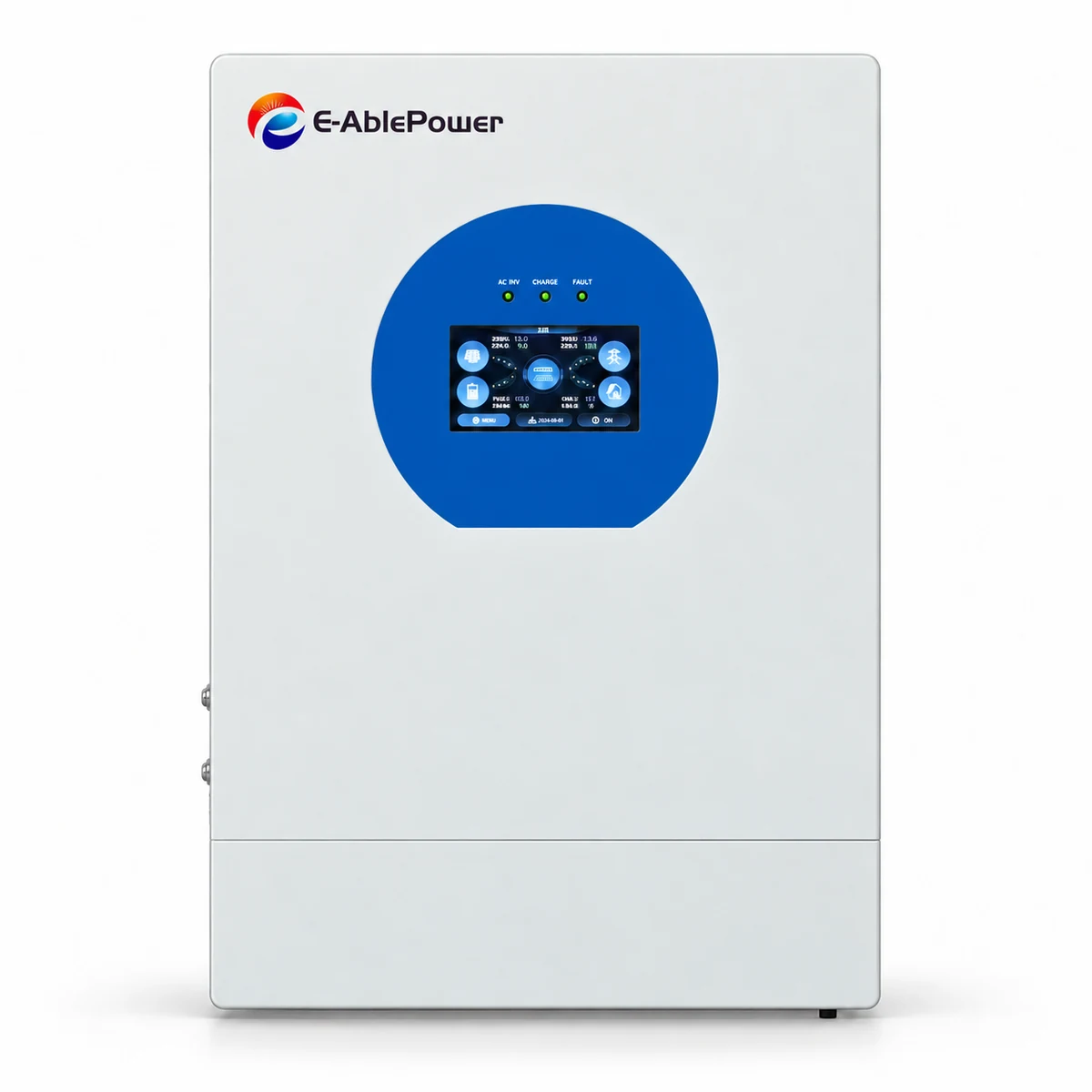
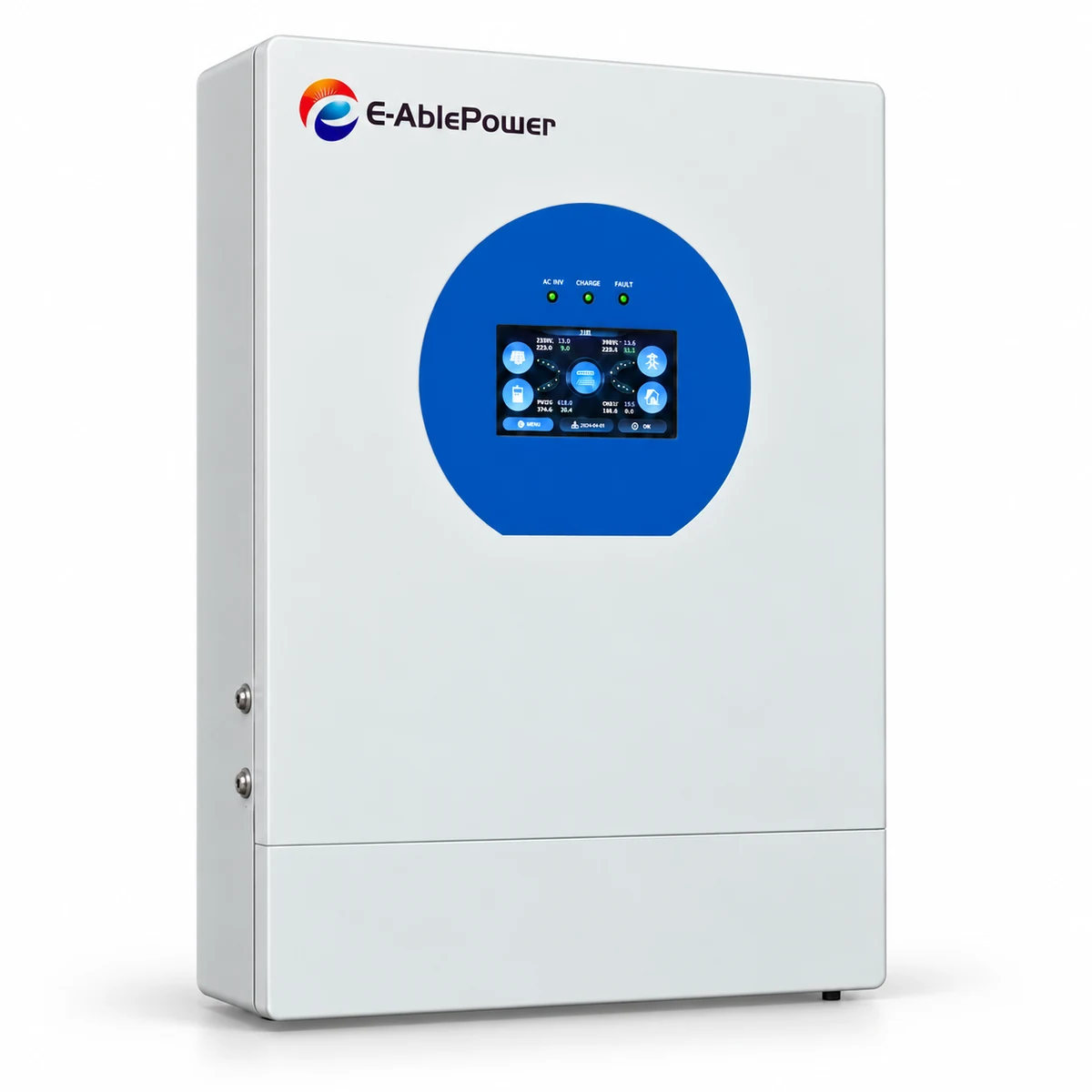
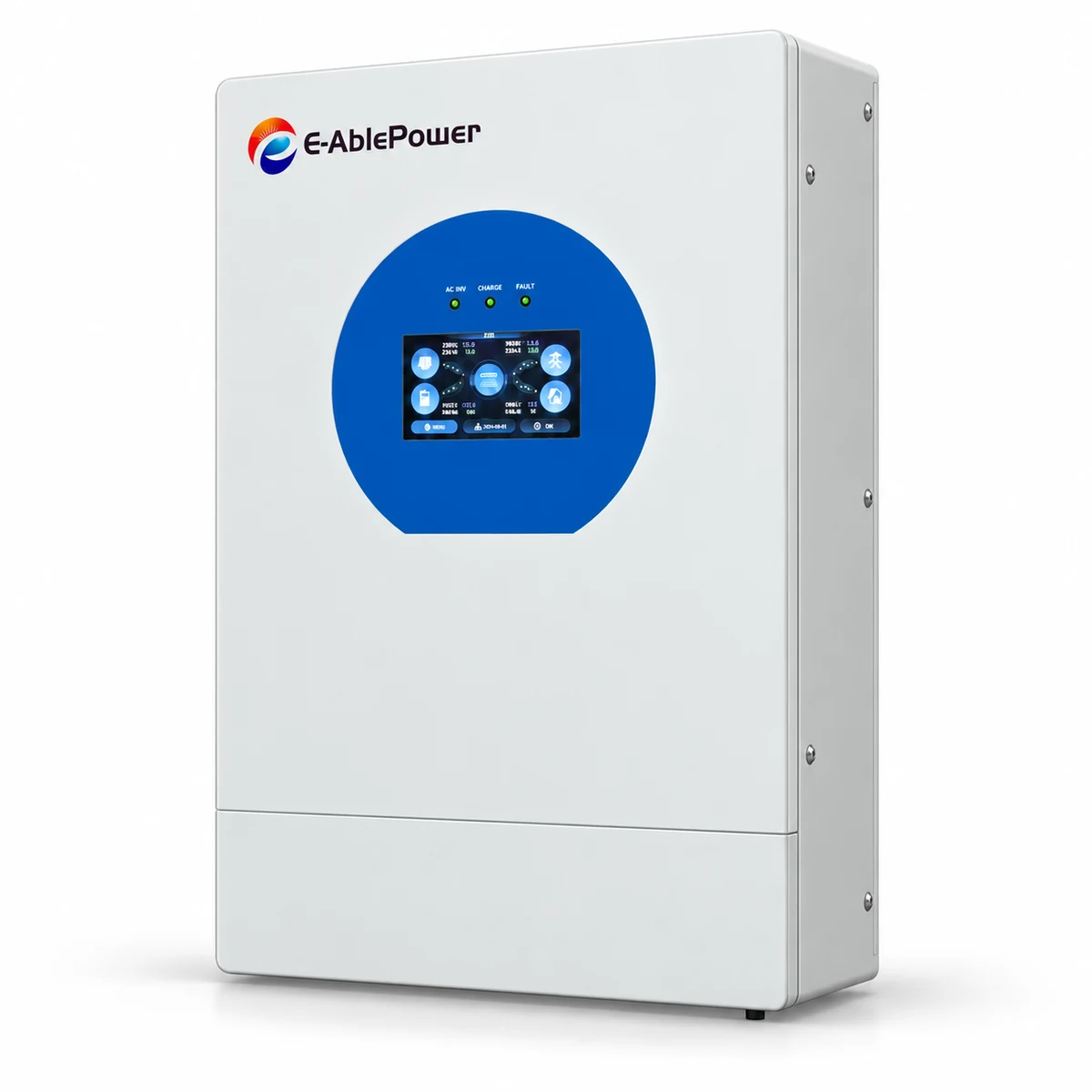
- 15.9 kg in a 580 × 359 × 127 mm IP20 enclosure for indoor wall mounting
Technical specifications
Values below are transcribed from the supplied datasheet. Items marked "to be confirmed" are pending supplier verification and are not commercial commitments.
| Rated AC power | 8 000 W |
|---|---|
| Max. AC apparent power | 12 000 (unit as printed in source) |
| Battery voltage range | 40–58.6 Vdc |
| Max. charging current | 0–160 A |
| Max. discharging current | 180 A |
| Battery inputs | 1 |
| Max. PV input power | 5 000 W + 5 000 W |
| Rated PV input voltage | 280 V |
| Max. PV input current | 18 A + 18 A |
| Rated / max. AC input-output current | 120 A / 120 A |
| Max. continuous bypass current | 150 A |
| EU efficiency / MPPT efficiency | > 93% |
| Enclosure (W x H x D) | 580 × 359 × 127 mm |
| Net weight | 15.9 kg |
| Output voltage | 120 Vac (L1/N, L2/N) / 240 Vac (L1/L2) ±5% |
| Output frequency | 47±0.3–55±0.3 Hz (50 Hz) / 57±0.3–65±0.3 Hz (60 Hz) |
| MPPT count | 2 (range 90–450 Vdc, max PV 500 Vdc, start 120 V) |
| Off-grid peak (1.5x rated) | 1.5× rated for 10 s |
| THDi / DC injection | 3% / < 0.5% |
| Protection | Short circuit, over/under voltage, overload, reverse feed; anti-islanding: yes; surge Class II |
| Communication | USB / RS485 / (WiFi / GPRS) / dry-node control; WiFi |
| Operating temperature / humidity | −10 to 55 °C (derate above 45 °C); 5–95% RH |
| Altitude / noise | 2 000 m / ≤ 60 dB |
| IP rating / topology | IP20 / non-isolated |
| Overvoltage category | DC OVC II / AC OVC III |
| Battery type | Lithium-ion or lead-acid; lithium BMS self-adaptive |
Product views
PV and battery matching
Each tracker takes 5 kW at 18 A, with a 280 V rated input voltage, a 90–450 Vdc MPPT window and 500 Vdc open-circuit maximum. On a small array the practical limit is usually string voltage at the low end rather than current, so check that the start voltage of 120 V is reached early on cloudy mornings.
The battery side is a single input between 40 and 58.6 Vdc, charging at up to 160 A and discharging at 180 A. Lithium BMS behaviour is self-adaptive, but the continuous discharge figure is what sets the bank's usable size, so size the bank for 180 A rather than for nameplate kWh.
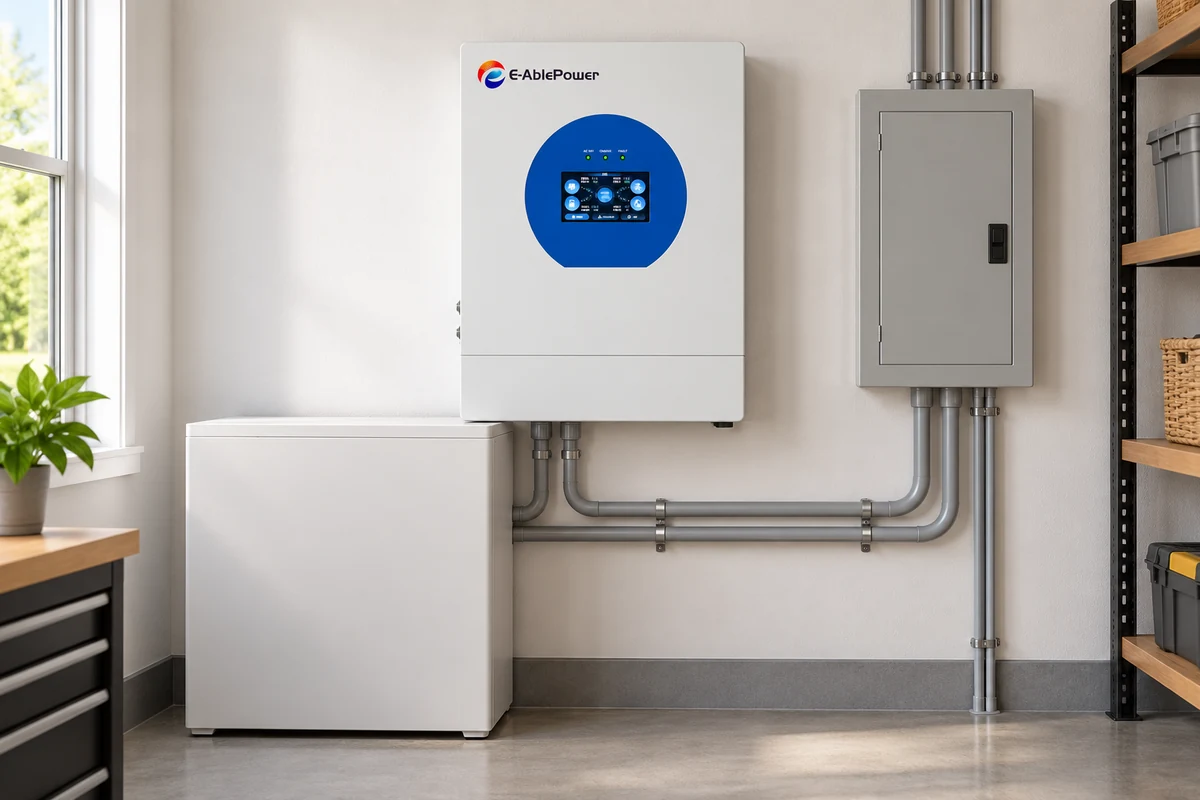
AC input and output are rated 120 A with a 150 A continuous bypass path, harmonic distortion of 3% and DC injection below 0.5%. The unit is IP20 and non-isolated, which puts it in a utility room or garage, not on an exterior wall.
Frequently asked questions
Is 8 kW enough to back up a whole house?
It covers a partial-load panel comfortably and a whole house only if the load list is trimmed. The 12 kVA apparent power and 1.5× overload for 10 s give headroom for starting a well pump or one air conditioner, but simultaneous large loads have to be managed or interlocked.
Can it start an air conditioner?
It depends on the compressor's locked-rotor current rather than its running amps. The unit delivers 1.5× rated for 10 s, so a soft-start or inverter-driven unit is a much safer match than a fixed-speed compressor with a hard start.
How much PV can I connect to the 8 kW model?
5 kW on each of two trackers, 18 A per input, within 90–450 Vdc and below 500 Vdc open circuit. That is a modest array by modern standards, which is deliberate on a single-battery-input unit: the bank, not the roof, is usually the constraint.
Where can the inverter be installed?
Indoors. The enclosure is IP20 and the topology is non-isolated, so it needs a dry, ventilated position such as a garage or utility room. Ambient above 45 °C requires derating.
What is the difference between the 8 kW and 12 kW models?
PV input rises from 5 kW + 5 kW to 6 kW + 6 kW, charging current from 160 A to 220 A, and weight from 15.9 kg to 24.3 kg. Both are split-phase 120/240 V units on the same 48 V platform; choose by the load list and the array size rather than by the kW figure alone.
Related products
- Residential Solar Power Inverter — overview of the full inverter range
- Split Phase Hybrid Inverter 7.2kW 12kW — existing split-phase series
- Energy Storage Systems — battery and ESS options
Product appearance is an illustration. Specifications are transcribed from supplier datasheets and are subject to confirmation; final configuration, certification and warranty are per the signed sales contract.