
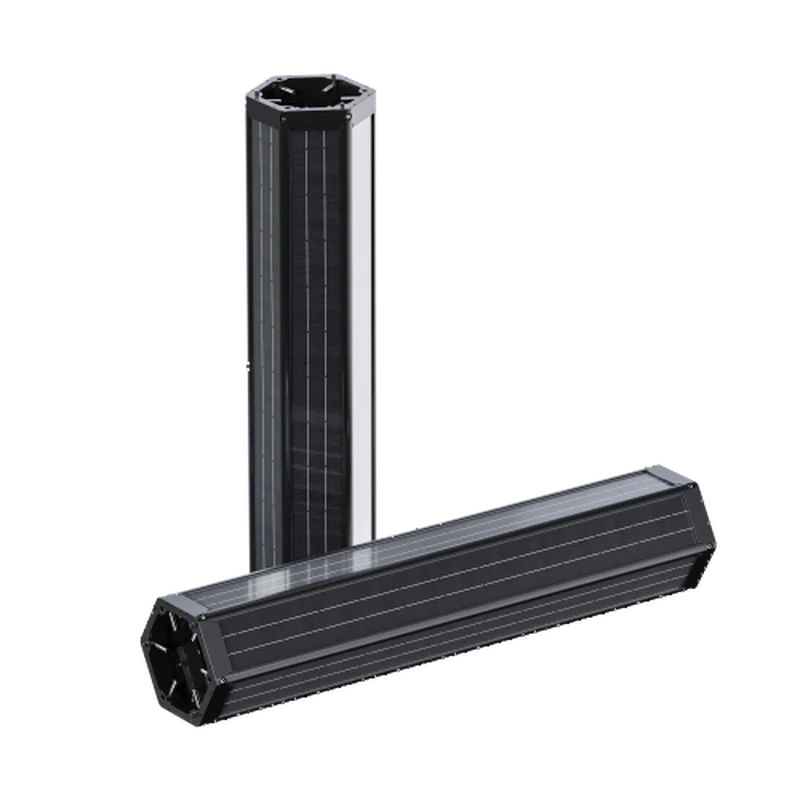
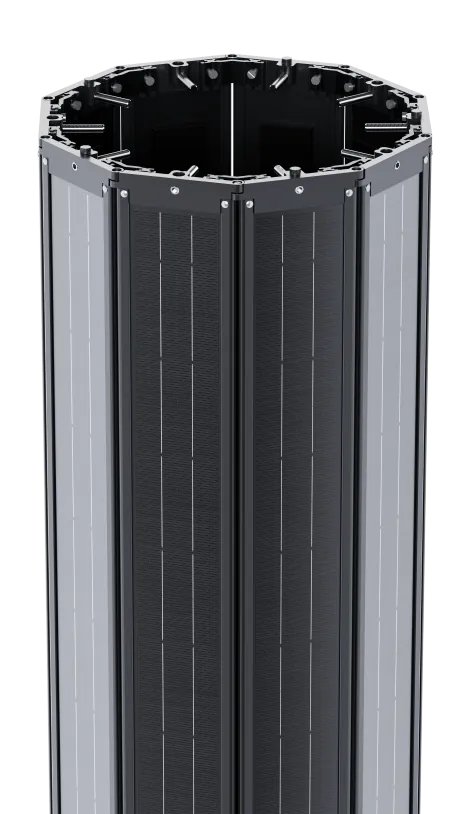
E-ABLE POWER / SolarWrap vertical solar modules

Solar panels for poles not for roofs.

Four module formats, 19 models, 80 W to 300 W. Clamp onto an existing pole, keep the foundation, keep the luminaire, and stop paying for panel washing.

Product overview

Four ways to fit one pole

Pick the format by pole diameter and by what the head needs.

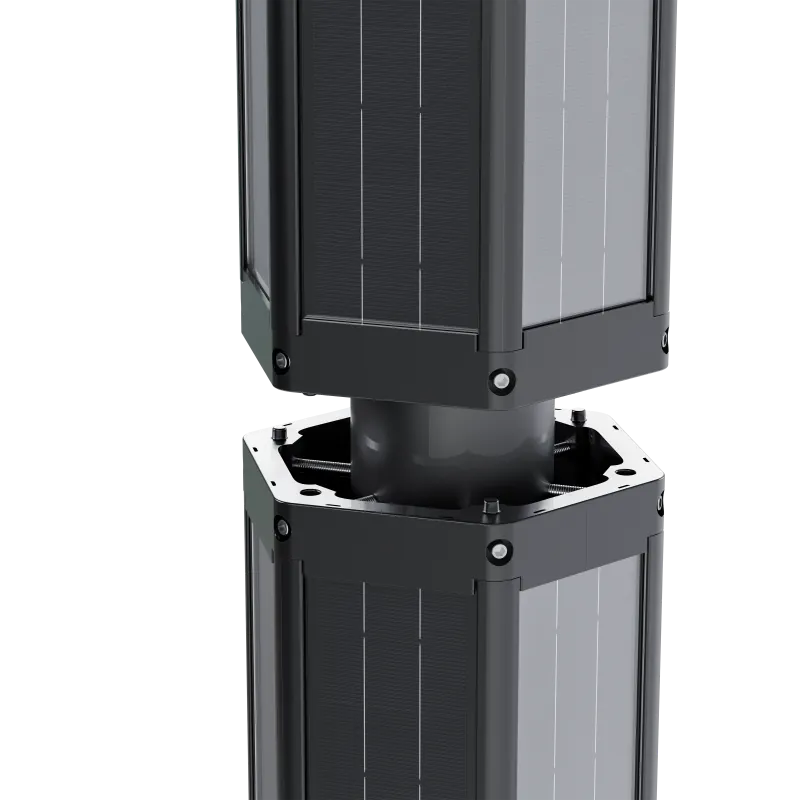
A vertical module turns the pole into the mounting structure. No bracket arm, no ballast, no tilt setting and no shadow on the road: the array is the pole. That is why the format is specified for street lighting, CCTV masts and signage where a flat panel would need a frame, a foundation and a planning consent.

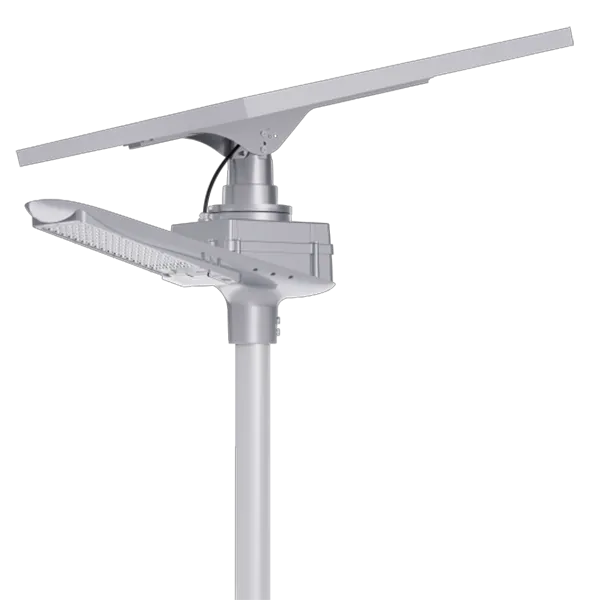
The trade is real: a vertical face collects less energy per watt than an optimally tilted panel. It wins on everything else — cleaning, wind load, snow, theft and appearance — and on the one thing that usually decides the tender: it can be retrofitted without touching the street.

SolarWrap vertical solar modules for street light poles
Technical data

Which format for which pole

Nameplate values at STC. Where the factory sheet and the price list disagree, the datasheet value is used.

FormatModelsPowerMax. poleLengthBest for
HexagonQ140 / Q200140–200 W≤ 150 mm1.56 / 2.06 mStreet lighting retrofit
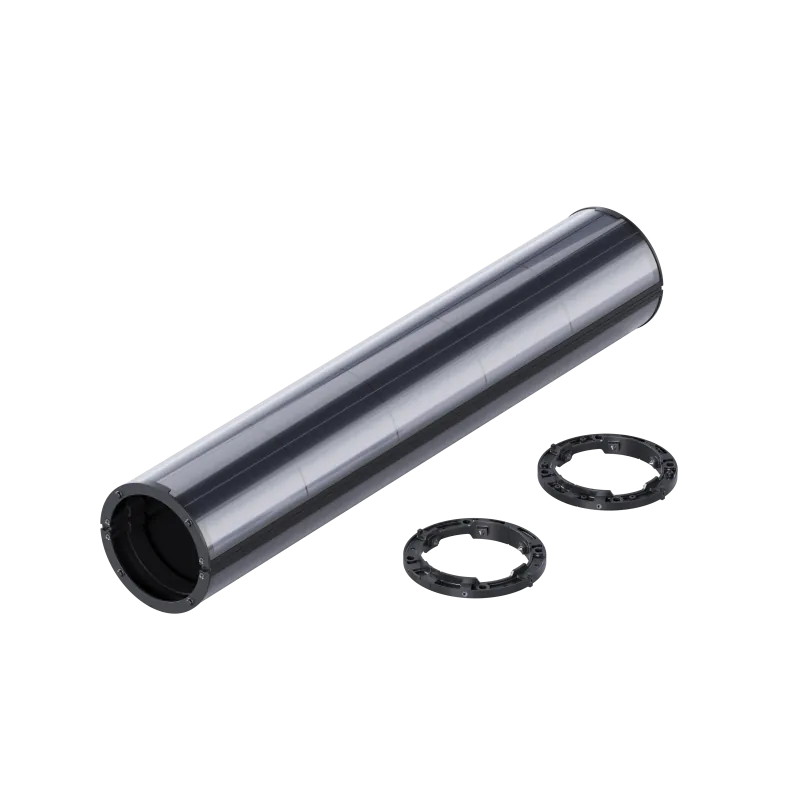
CircularS80 / S100 / S14080–140 W≤ 170 mm1.04 mGarden lighting, small poles
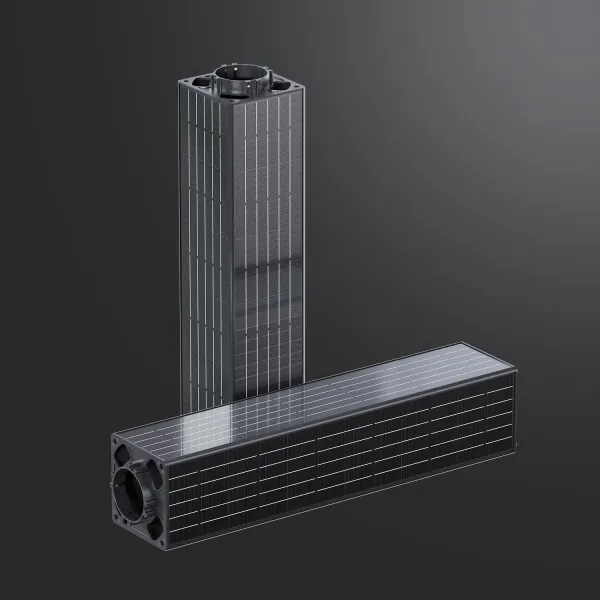
SquareSQ140 / SQ220 / SQ260140–260 W≤ 140 mm1.04–1.82 mSquare poles, high power
FoldableHEXA / OCTA / DECA / DODE100–300 W≤ 330 mm1.16 / 1.56 mExport, large poles, spares
Wind resistance to IEC 60598-2-3, test report LCS201222096BS-EA-2026. Mechanical load figures are test values, not a site-specific structural approval. CE / EMC documentation is not claimed for the module — request the current compliance file before tendering.
Selection

The short answer

Starting points, not a substitute for a yield calculation.

Typical installationModule and battery to specify
Street light on an existing poleHexagon Q140 or Q200 — widest clamp range, best documented.
Round pole, no orientation wantedCircular S100 or S140 — no front face, fastest to fit.
High power on a square columnSquare SQ220 or SQ260 — most glass per metre of pole.
Container shipment, large polesGeoFlex — folds flat, up to 330 mm pole diameter.
Applications

Where vertical wins

Six applications that keep coming back in tenders.

Street lighting

New poles or a retrofit of an existing column, 30 W to 120 W LED heads.

CCTV and security

Camera masts, ANPR and perimeter poles that need power without a cable run.

Road signs and signals

Off-grid beacons, warning lights and signal heads on the same pole.

Garden and park lighting

Poles where a tilted panel would never be approved.

Telecom and broadcast

Wi-Fi, LoRa gateways, speakers and public-address nodes.

Advertising and shelters

Bus shelters, totems and roadside displays with a small daily load.

FAQ

Frequently asked questions

Sizing, pole fit, maintenance and warranty.

How does SolarWrap generate 25-35% more energy than flat panels?

A flat panel only captures direct sunlight optimally for 2-3 peak hours when the sun is perpendicular to the panel surface. SolarWrap's cylindrical geometry ensures half the module always faces the sun regardless of its position — capturing meaningful energy from dawn to dusk. During morning and late afternoon (when flat panels drop to 20-30% output), SolarWrap maintains 60-70%. Over a full day, the cumulative gain is 25-35%. This is particularly significant in high-latitude regions where the sun traces a low, wide arc across the sky.
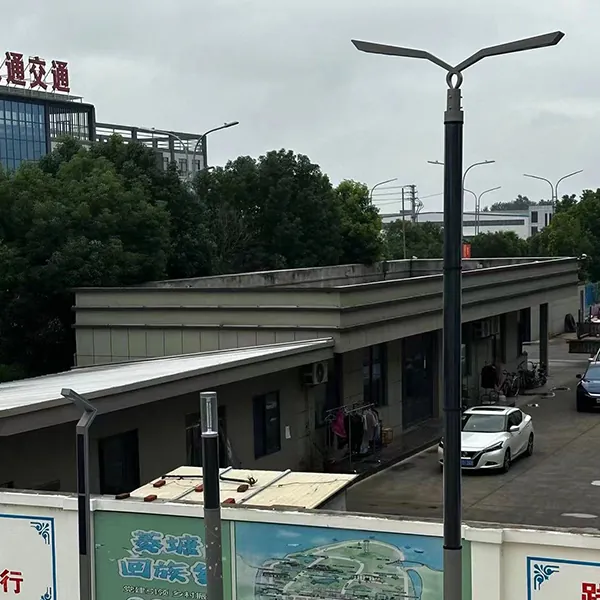
Can SolarWrap modules be installed on existing poles?

Yes — this is one of SolarWrap's core advantages. The modular clamp-on mounting system fits any pole diameter from Φ70mm to Φ330mm without drilling, welding, or structural modification. The clamps use stainless steel bands with rubber padding to protect the pole finish. Installation takes approximately 15-20 minutes per module by a two-person crew. This makes SolarWrap ideal for retrofit projects where existing poles need solar power added without replacing the entire pole infrastructure.

What maintenance does SolarWrap require in dusty or snowy environments?

The vertical surface is inherently self-cleaning. Rainwater flows downward by gravity, carrying dust, sand, and pollen off the glass surface. Snow slides off naturally when it reaches the melting point — unlike flat panels where wet snow refreezes into ice sheets that block cells for days. In extremely arid regions (Middle East, Sahara), an annual wipe-down with a damp cloth restores full output — compared to the monthly cleaning that flat panels often require. Bird droppings, a major flat-panel problem, rarely accumulate on vertical surfaces because birds cannot perch on cylindrical modules the way they do on flat panel edges.

Which SolarWrap model is right for my project?

Selection depends on two factors: your power requirement and your pole diameter. Street lighting (30-100W LED) typically uses Q140 Hex or Q200 Hex modules. CCTV and telecom (50-80W load) suits S100-S140 Round modules. Traffic signals and broadcasting (80-150W load) benefits from OCTA-20018 or OCTA-25018 foldable polygon modules. Large-scale infrastructure with poles above Φ190mm can use OCTA-30018 (up to Φ330mm). Provide your pole diameter and power target and our team returns a matched recommendation within 24 hours.

Plan your SolarWrap Vertical Solar Panels — 360° Cylindrical & Hexagonal Solar Modules Q140 Q200 for Pole Installation project.

Send your site conditions, lighting requirements or load profile for a system engineered to your location — DIALux simulation, sizing and pricing within 2–3 business days.