
Downloads
Print-ready PDF — specifications and installation in one place, no login required.
Key features
- 12 kW continuous split-phase output at 120/240 Vac
- 1.5× rated overload for 10 s on the backup output
- Two MPPT inputs, 6 kW + 6 kW PV at 22 A + 22 A
- 220 A maximum battery charge and 270 A discharge current
- 50 A AC input and output with a 60 A continuous bypass path
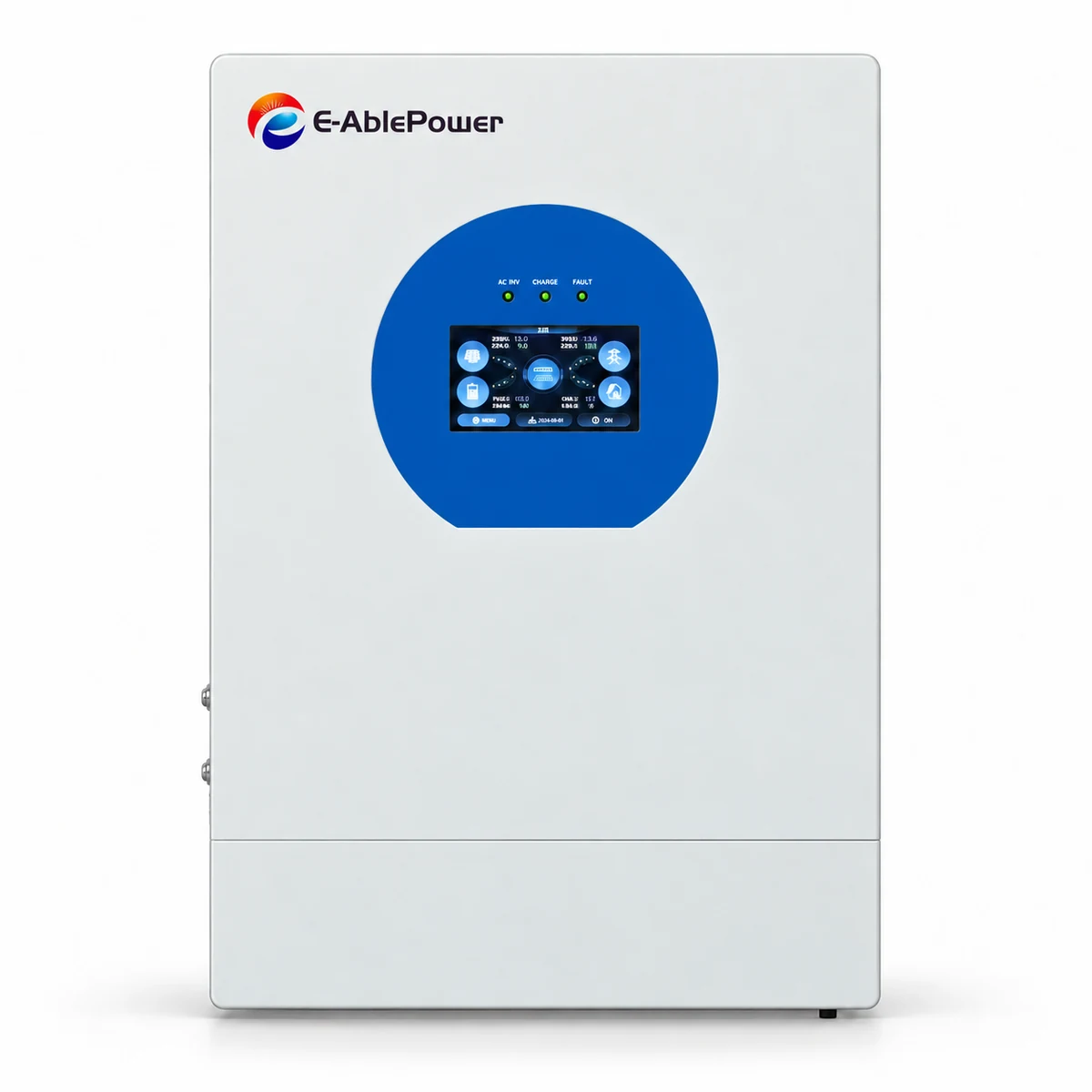
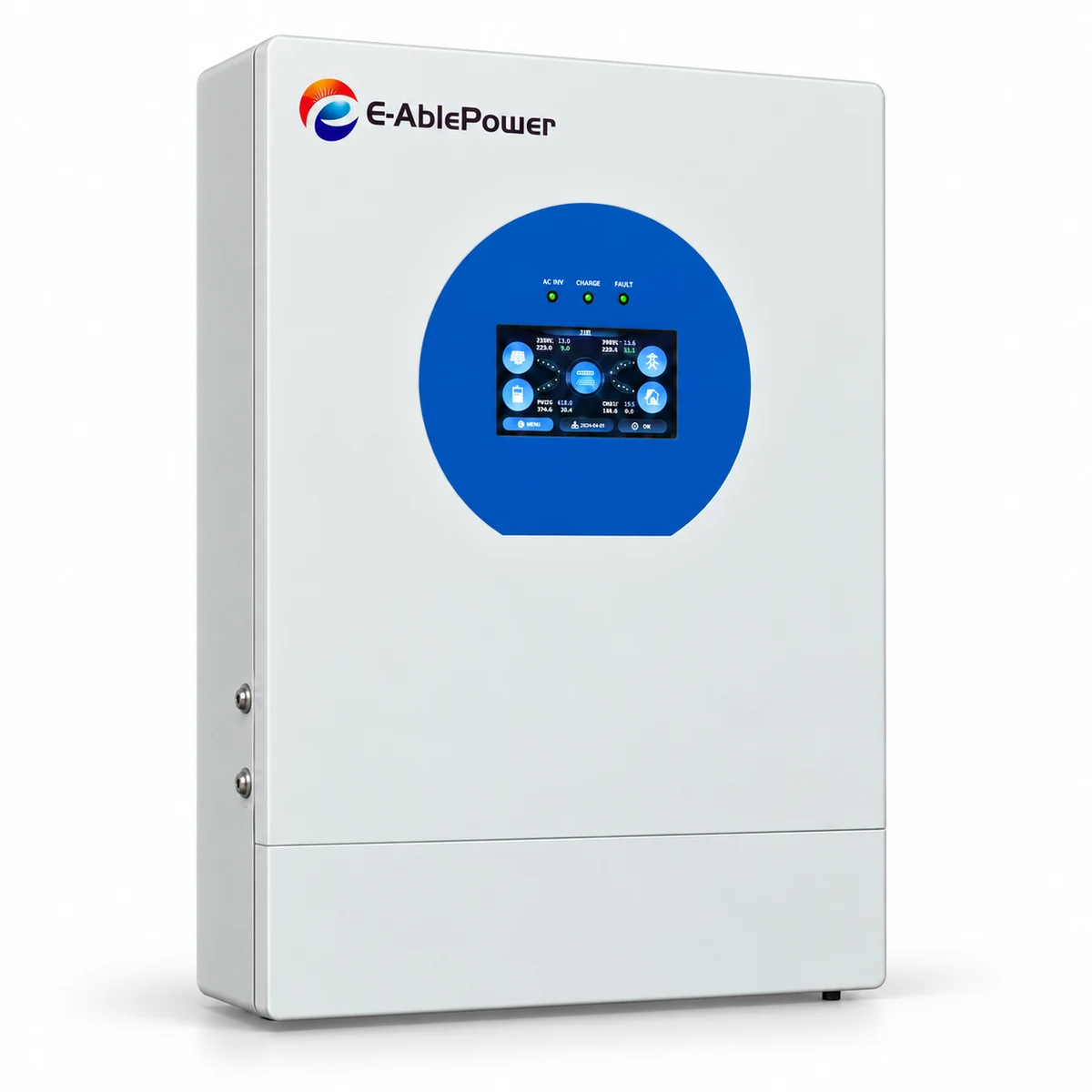
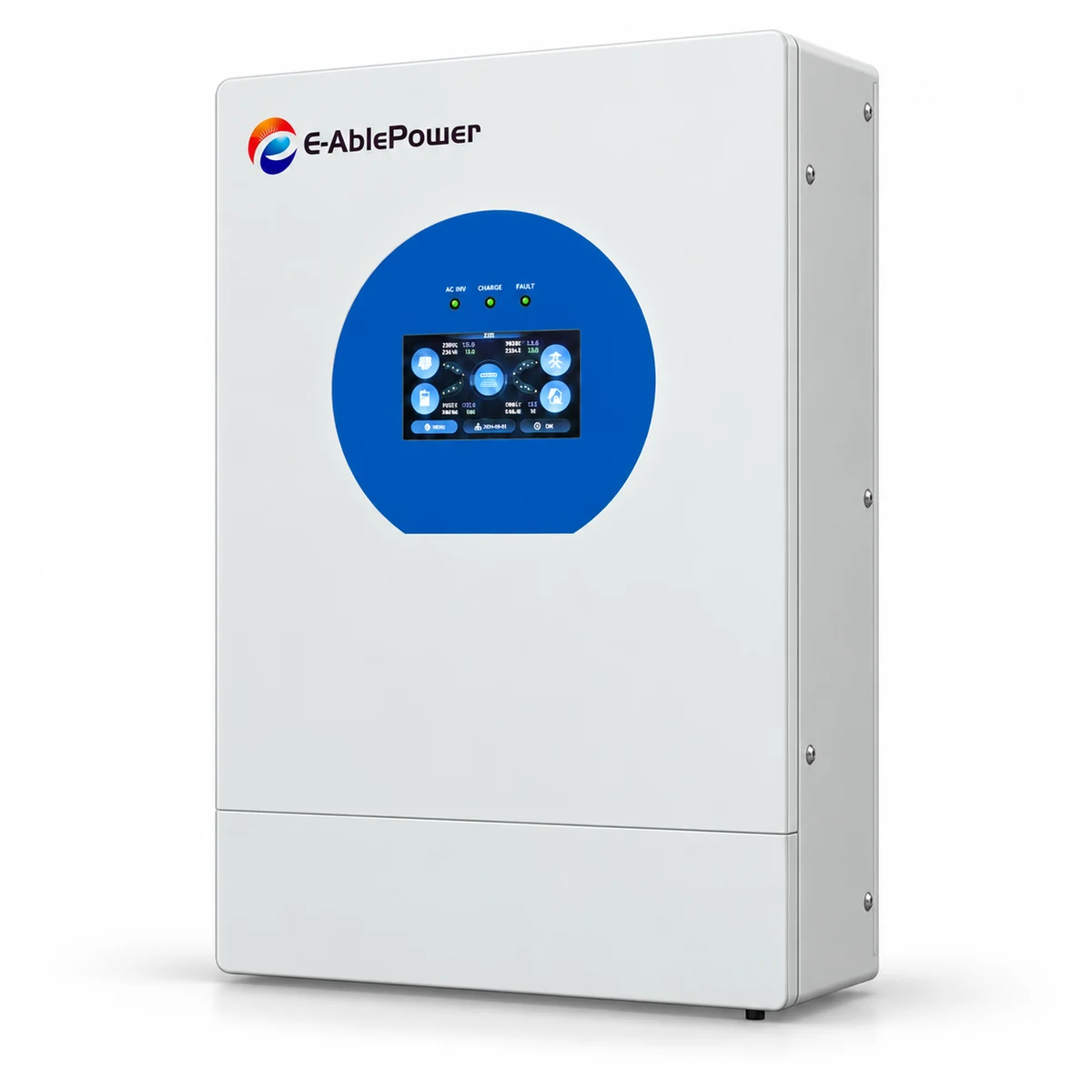
- 24.3 kg in a 620 × 450 × 132 mm IP20 enclosure
Technical specifications
Values below are transcribed from the supplied datasheet. Items marked "to be confirmed" are pending supplier verification and are not commercial commitments.
| Rated AC power | 12 000 W |
|---|---|
| Max. AC apparent power | 12 000 (unit as printed in source) |
| Battery voltage range | 40–58.6 Vdc |
| Max. charging current | 0–220 A |
| Max. discharging current | 270 A |
| Battery inputs | 1 |
| Max. PV input power | 6 000 W + 6 000 W |
| Rated PV input voltage | 272 V |
| Max. PV input current | 22 A + 22 A |
| Rated / max. AC input-output current | 50 A / 50 A |
| Max. continuous bypass current | 60 A |
| EU efficiency / MPPT efficiency | > 93% |
| Enclosure (W x H x D) | 620 × 450 × 132 mm |
| Net weight | 24.3 kg |
| Output voltage | 120 Vac (L1/N, L2/N) / 240 Vac (L1/L2) ±5% |
| Output frequency | 47±0.3–55±0.3 Hz (50 Hz) / 57±0.3–65±0.3 Hz (60 Hz) |
| MPPT count | 2 (range 90–450 Vdc, max PV 500 Vdc, start 120 V) |
| Off-grid peak (1.5x rated) | 1.5× rated for 10 s |
| THDi / DC injection | 3% / < 0.5% |
| Protection | Short circuit, over/under voltage, overload, reverse feed; anti-islanding: yes; surge Class II |
| Communication | USB / RS485 / (WiFi / GPRS) / dry-node control; WiFi |
| Operating temperature / humidity | −10 to 55 °C (derate above 45 °C); 5–95% RH |
| Altitude / noise | 2 000 m / ≤ 60 dB |
| IP rating / topology | IP20 / non-isolated |
| Overvoltage category | DC OVC II / AC OVC III |
| Battery type | Lithium-ion or lead-acid; lithium BMS self-adaptive |
Product views
PV and battery matching
The 272 V rated PV input sits inside a 90–450 Vdc MPPT window with a 500 Vdc open-circuit ceiling, and each tracker accepts 6 kW at 22 A. Two trackers let you run a shaded east array and a clear west array independently instead of compromising on one string voltage.
Battery voltage spans 40–58.6 Vdc on a single input, with 220 A charging and 270 A discharge. Because charge current is high relative to the array, a 12 kW unit can refill a modest bank from grid or generator overnight, which matters where daytime tariffs are the only cheap window.
AC input and output are 50 A with a 60 A continuous bypass, THDi of 3%, DC injection below 0.5% and an EU efficiency above 93%. Overvoltage category is DC II and AC III, which is the normal domestic service classification.
Frequently asked questions
12 kW or 16 kW — how do I choose?
Start from the simultaneous load list, not the service size. A 12 kW unit carries a typical all-electric home with one EV charging overnight; a 16 kW unit adds a second battery input, 300 A charging and 24 kVA apparent power for homes with two EVs or electric resistance heating.
Can it run a 5-ton air conditioner?
Usually yes if the unit is inverter-driven, because the surge is short and the 1.5× overload covers 10 s. Fixed-speed compressors with high locked-rotor current should be checked against the 1.5× figure and may need a soft starter.
How big a battery bank should I pair with it?
Size for 270 A continuous discharge rather than kWh on the label: a 48 V bank delivering 270 A is roughly 13 kW, which matches the inverter. Charging is limited to 220 A, so a very large bank will take longer to refill from AC than the PV array would suggest.
Does the 12 kW model accept oversized PV?
Not much. PV input is capped at 6 kW + 6 kW even though the inverter is rated 12 kW, so the DC/AC ratio is close to 1.0. If you plan a larger array, the AVS platform on this site accepts 12 kW + 12 kW on the same 12 kW rating.
Is it certified for grid connection?
No certification documents were supplied for this model, and we do not claim grid-connection approval. Ask for the certificates relevant to your market before filing an interconnection application.
Related products
- Residential Solar Power Inverter — overview of the full inverter range
- Split Phase Hybrid Inverter 7.2kW 12kW — existing split-phase series
- Energy Storage Systems — battery and ESS options
Product appearance is an illustration. Specifications are transcribed from supplier datasheets and are subject to confirmation; final configuration, certification and warranty are per the signed sales contract.