
Downloads
Print-ready PDF — specifications and installation in one place, no login required.
Key features
- AVS voltage stabilizer on the AC side, keeping the supply inside its regulated window
- Bidirectional stabilizer: grid in for regulation, inverter output back out for export
- 16 kW continuous with 24 kVA surge for motor-heavy sites
- Parallel up to six units, with configuration and accessories confirmed per order
- Two MPPT inputs, 12 kW + 12 kW PV at 36 A + 36 A, 300 A charging
- IP21, 4000 m rating, LCD with RS232, RS485 and CAN, 10 ms typical transfer
Technical specifications
Values below are transcribed from the supplied datasheet. Items marked "to be confirmed" are pending supplier verification and are not commercial commitments.
| Rated AC power | 16 kW |
|---|---|
| Surge power | 24 kVA (duration not stated in datasheet) |
| Output voltage | 120/240 Vac |
| Output frequency | 50/60 Hz auto input; 50/60 Hz ±0.1% output |
| Transfer time | 10 ms typical |
| AC mode efficiency | 93.5% (battery mode) |
| Parallel units | 1–6 (configuration and accessories to be confirmed) |
| Max. PV input power | 12 000 W + 12 000 W |
| Max. PV input current | 36 A + 36 A |
| PV / MPPT operating range | 90–450 Vdc / 500 Vdc max |
| PV / hybrid charge current | 300 A PV / 200 A AC / 300 A hybrid |
| Battery nominal / start voltage | 48 V nominal / 54 V float / 61 V overcharge protection |
| Battery type | Lithium and lead-acid |
| Display / interface | LCD; RS232 / RS485 / CAN |
| Monitoring | WiFi (optional / built-in / external) — factory configuration to be confirmed |
| IP rating / topology | IP21 |
| Operating temperature / humidity | −10 to 60 °C; 5–95% RH non-condensing |
| Storage temperature | −15 to 60 °C |
| Altitude / noise | 4 000 m; derate above 1 000 m |
| Overload protection | 105–110%: 5 min; 110–125%: 10 s; > 125%: 5 s |
Product views
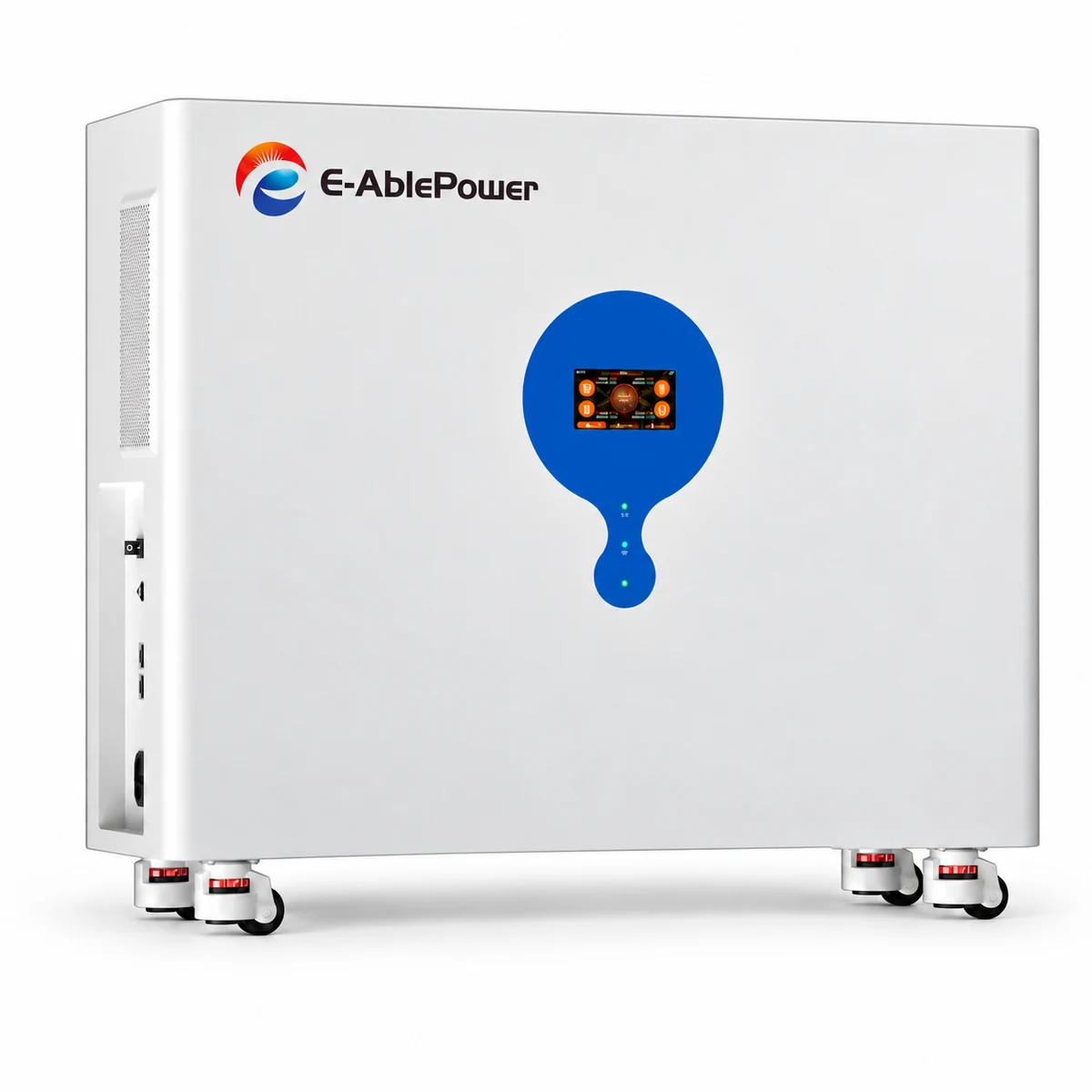
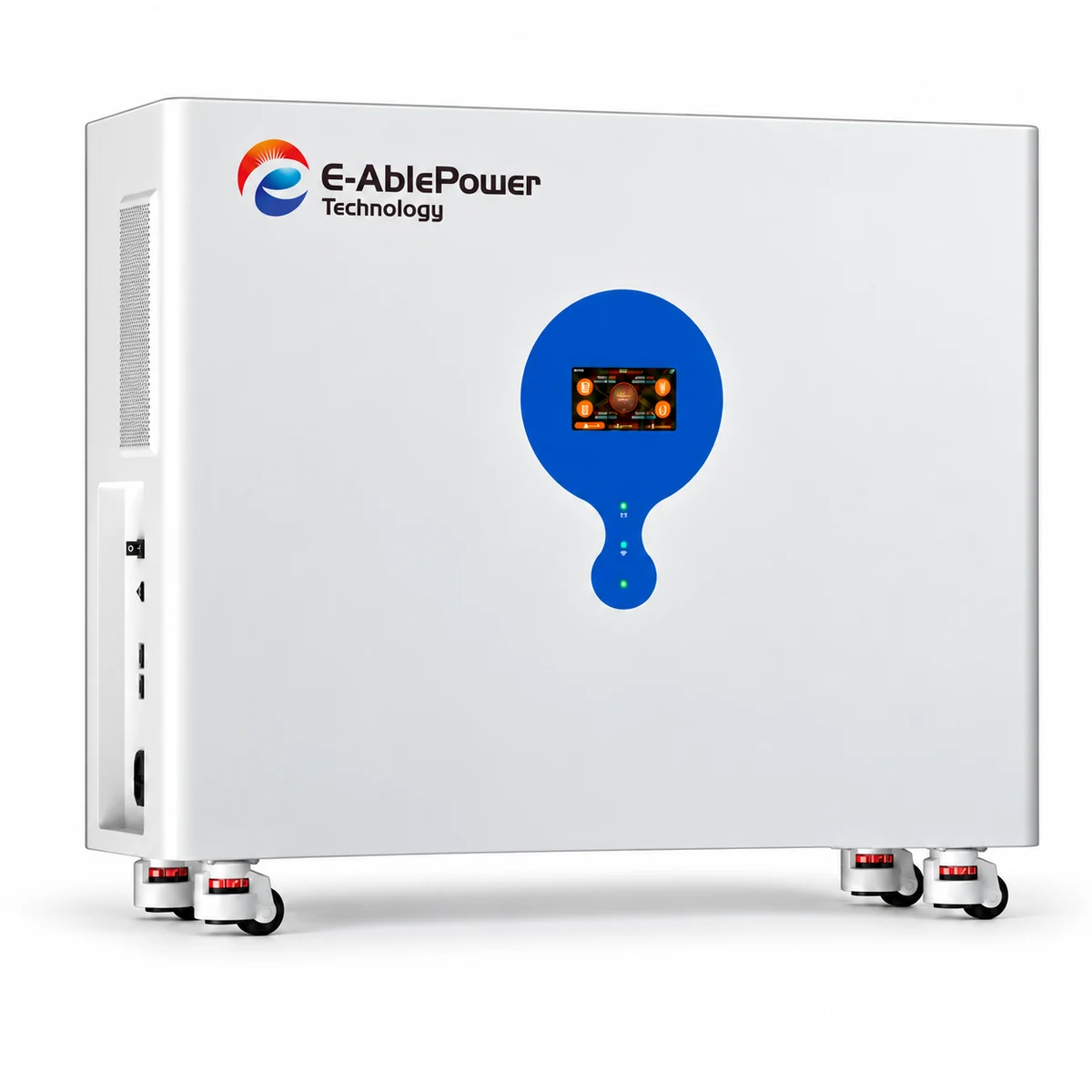
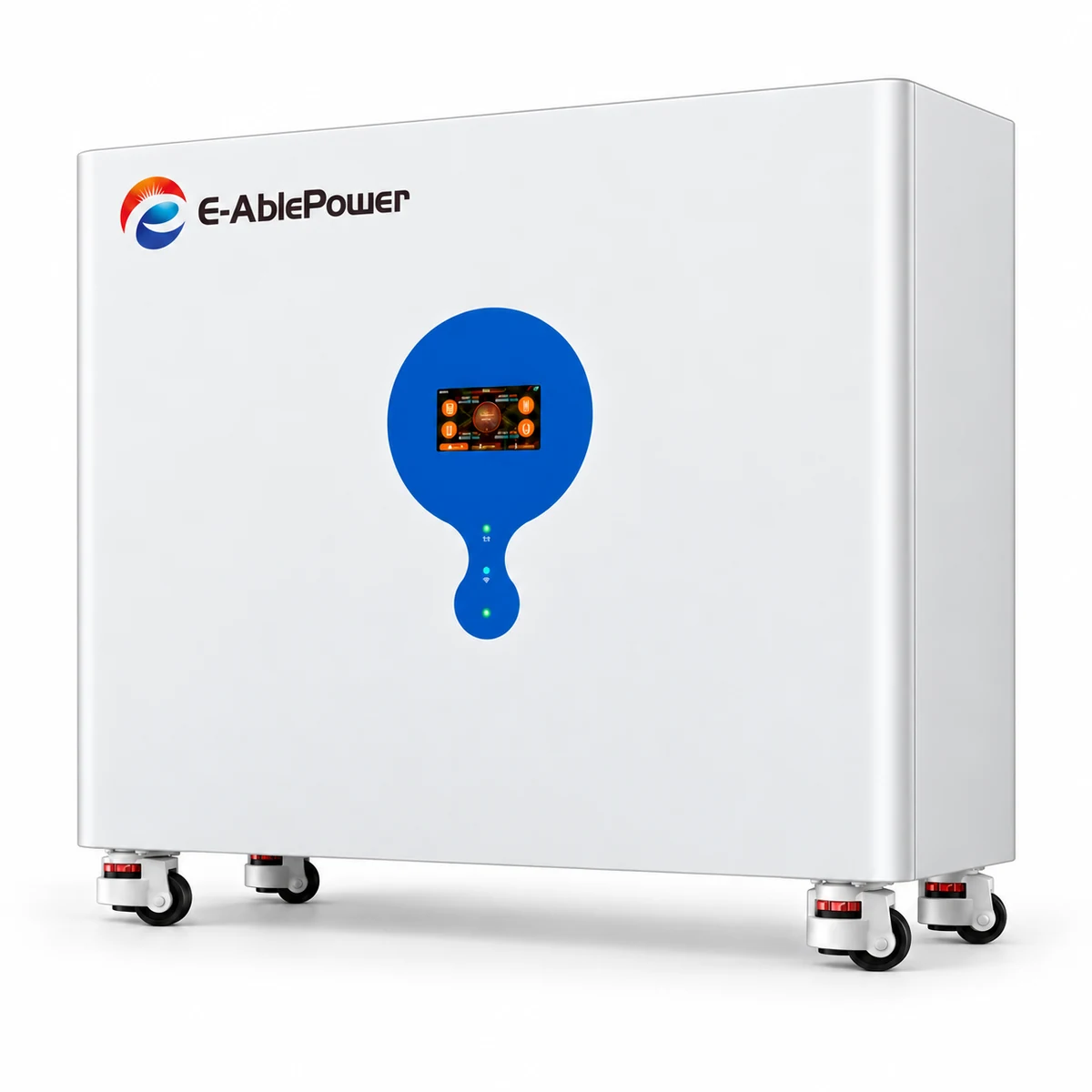
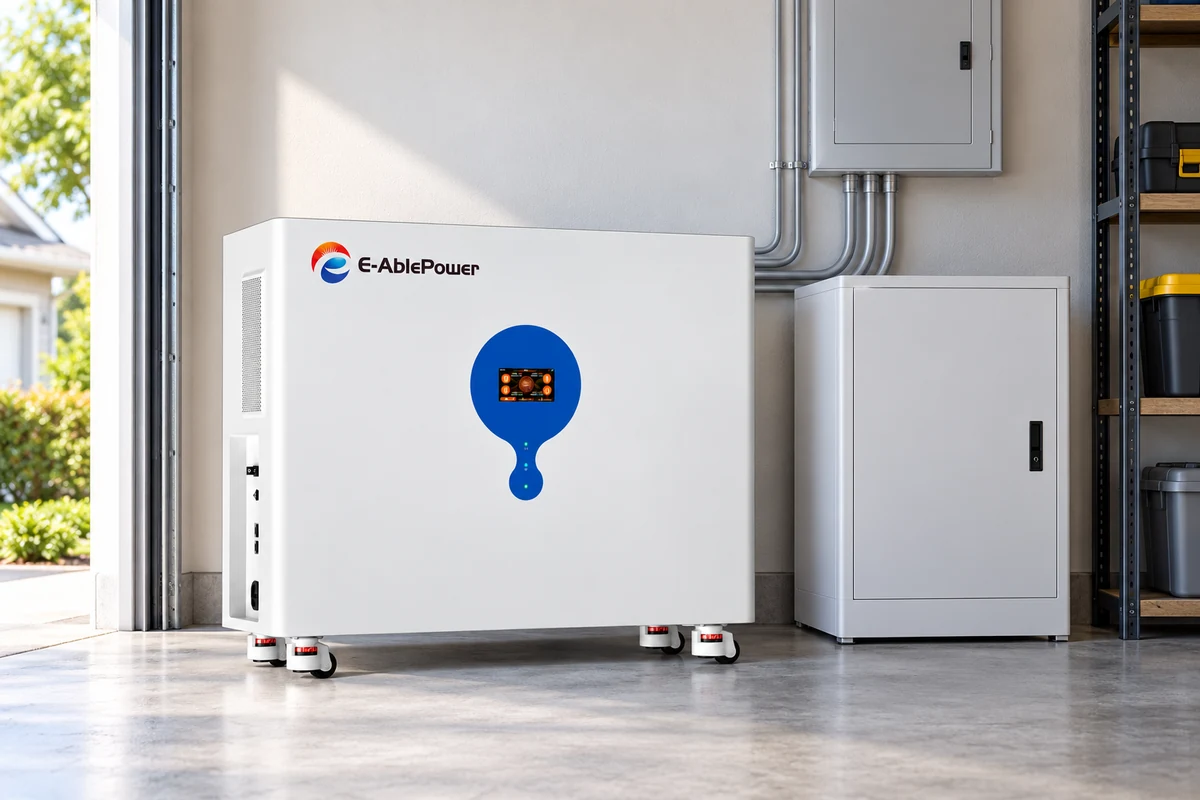
PV and battery matching
The stabilizer in front of this unit is specified for two-way current. Mains power enters and is regulated before it reaches the inverter; power the inverter produces travels back along the same path to the grid. That second direction is the part most stabilizers lack, and without it a grid-tied system loses export or has to route around the stabilizer, which defeats the purpose of fitting one.
PV input is 12 kW + 12 kW at 36 A per tracker, 90–450 Vdc tracking with 500 Vdc open circuit, and charging reaches 300 A from PV, 200 A from AC and 300 A in hybrid mode. On a 48 V nominal bank with a 61 V overcharge limit, that charge rate sets a practical floor on bank size: a small bank will reach its own current limit long before the inverter does.
The 24 kVA surge figure carries no stated duration, so it is headroom for compressor and pump starting rather than continuous capacity. Up to six units may be paralleled, with configuration and accessories confirmed per order, which makes parallel expansion an engineered option rather than a field addition.
Frequently asked questions
What is AVS on this model?
AVS is the voltage stabilizer supplied with the inverter. It regulates the incoming supply before the inverter sees it, so voltage sag on a weak feeder or a generator does not push the unit to bypass.
Why must the stabilizer be bidirectional?
A stabilizer sits in series with the grid connection, so it carries current in both directions in a grid-tied system. If it only passes current inward, inverter export cannot travel back through it and the installation either loses export or bypasses the stabilizer. This unit is specified with a two-way stabilizer so both work together.
How does paralleling work in practice?
Up to six units can run together, and the datasheet states that configuration and accessories are confirmed per order. Each unit needs its own battery connection and the group needs shared bypass hardware, so the design is settled at order stage rather than added later in the field.
Is the 24 kVA surge continuous?
No. The datasheet gives 24 kVA as a surge figure without stating a duration, so continuous loads should be planned against the 16 kW rating and the surge treated as headroom for motor starting.
Is it certified for grid connection?
No certification documents were supplied for this model. We do not claim grid-connection approval and recommend requesting the certificates applicable to your market before an interconnection application.
Related products
- Residential Solar Power Inverter — overview of the full inverter range
- Split Phase Hybrid Inverter 7.2kW 12kW — existing split-phase series
- Energy Storage Systems — battery and ESS options
Product appearance is an illustration. Specifications are transcribed from supplier datasheets and are subject to confirmation; final configuration, certification and warranty are per the signed sales contract.