
Key features
- Three-phase 3L/N/PE 120/208 Vac output rated 16 kW at PF 1, pure sine wave
- 22.5 kVA peak with 7 HP motor-starting capability
- Two MPPT trackers, 12 kW + 12 kW PV, 32 A + 32 A per input, 500 Vdc maximum
- Three-pole 60 A bypass per phase for grid-side loads that stay on utility power
- Generator input on 3L/N/PE 120/208 Vac, 40–70 Hz, up to 160 A charge
- Parallel up to six units for 96 kW of combined three-phase output
Technical specifications
Values below are transcribed from the supplied datasheet. Items marked "to be confirmed" are pending supplier verification and are not commercial commitments.
| Rated output | 16 000 W / 16 000 VA, PF 1, pure sine wave |
|---|---|
| Output voltage | 3L/N/PE 120/208 Vac |
| AC input voltage range | (85–140 Vac) ±2% |
| Output frequency | 50 Hz ±0.3 / 60 Hz ±0.3 |
| Inverter efficiency | > 91% |
| AC mode efficiency | > 95% (AC mode, not inverter efficiency) |
| Peak power | 22 500 VA (duration not specified in datasheet) |
| Motor load capability | 7 HP |
| Transfer time | 10 ms typical |
| Parallel units | 1–6 |
| Bypass overload current | 3-pole, 60 A / 60 A / 60 A |
| Battery nominal / start voltage | 51.2 Vdc / 44 Vdc minimum |
| Battery voltage range | 40.0–58.6 Vdc ±0.6 V |
| Battery type | Lead-acid or lithium |
| Max. AC charging current | 200 Adc |
| Generator input | 3L/N/PE 120/208 Vac; 40–70 Hz; max charge 160 Adc |
| MPPT count | 2 |
| Max. PV open-circuit voltage | 500 Vdc |
| PV / MPPT operating range | 90–485 Vdc / 90–450 Vdc |
| Max. PV input power | 12 000 W + 12 000 W |
| Max. PV input current | 32 A + 32 A |
| PV / hybrid charge current | 300 Adc (0–300 Adc hybrid) |
| Communication | USB / RS485 / (WiFi / GPRS) / dry-node control |
| Operating temperature / humidity | −10 to 55 °C (derate above 45 °C); 5–95% RH |
| Storage temperature | −25 to 60 °C |
| Altitude / noise | ≤ 60 dB; variable-speed forced-air cooling |
| Enclosure (W x H x D) | 650 × 482 × 139 mm (L×W×D) |
| Net weight | 26 kg |
Product views
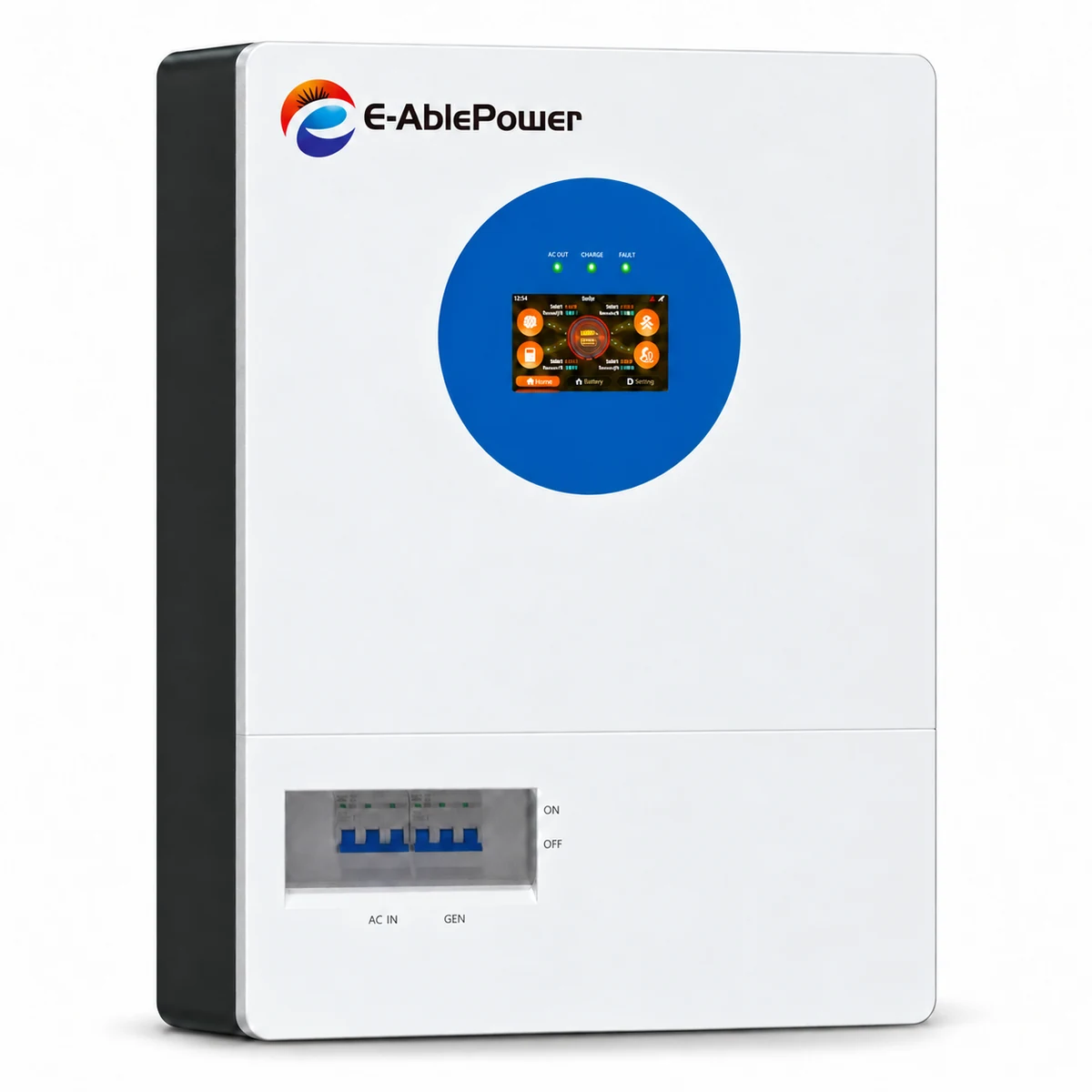
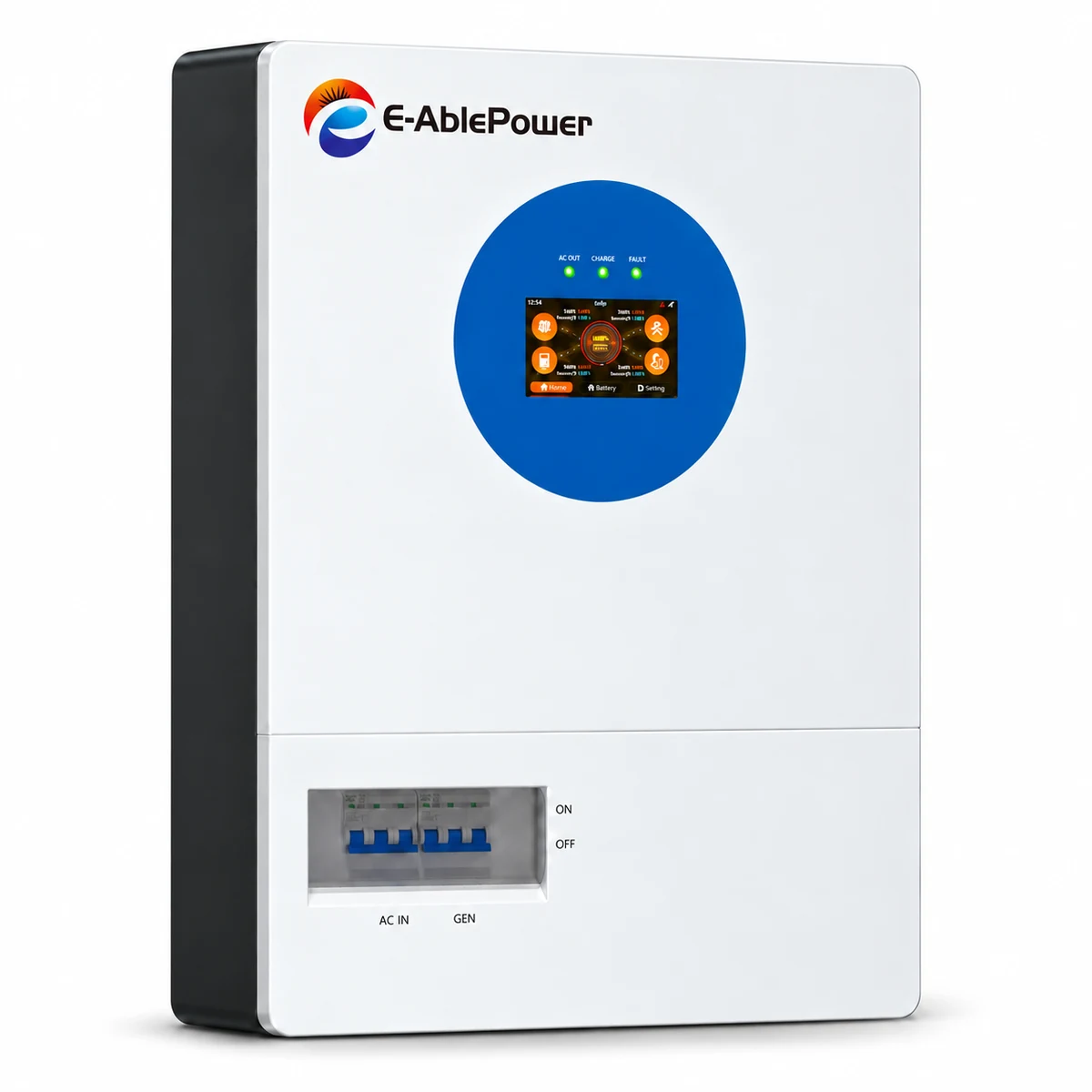
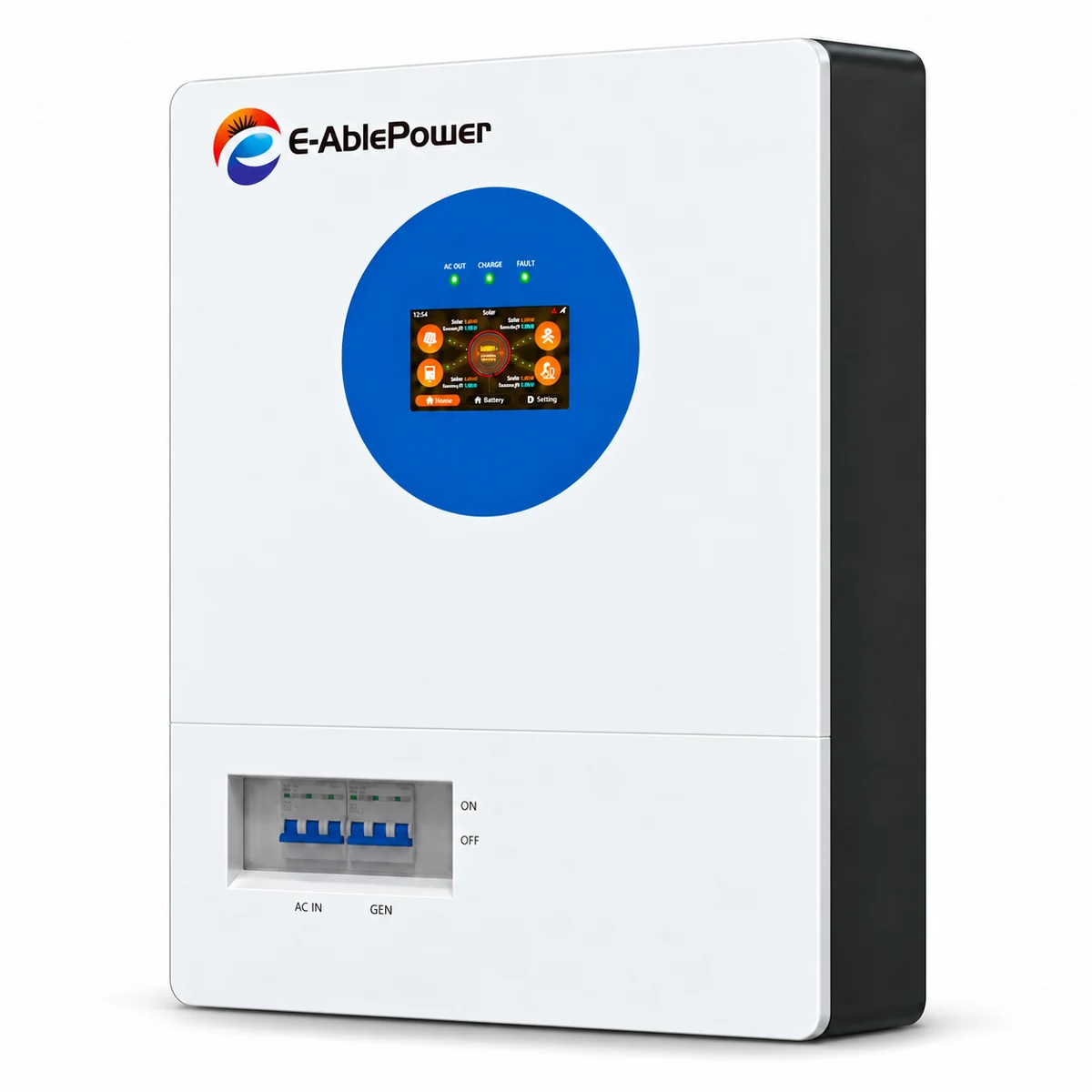
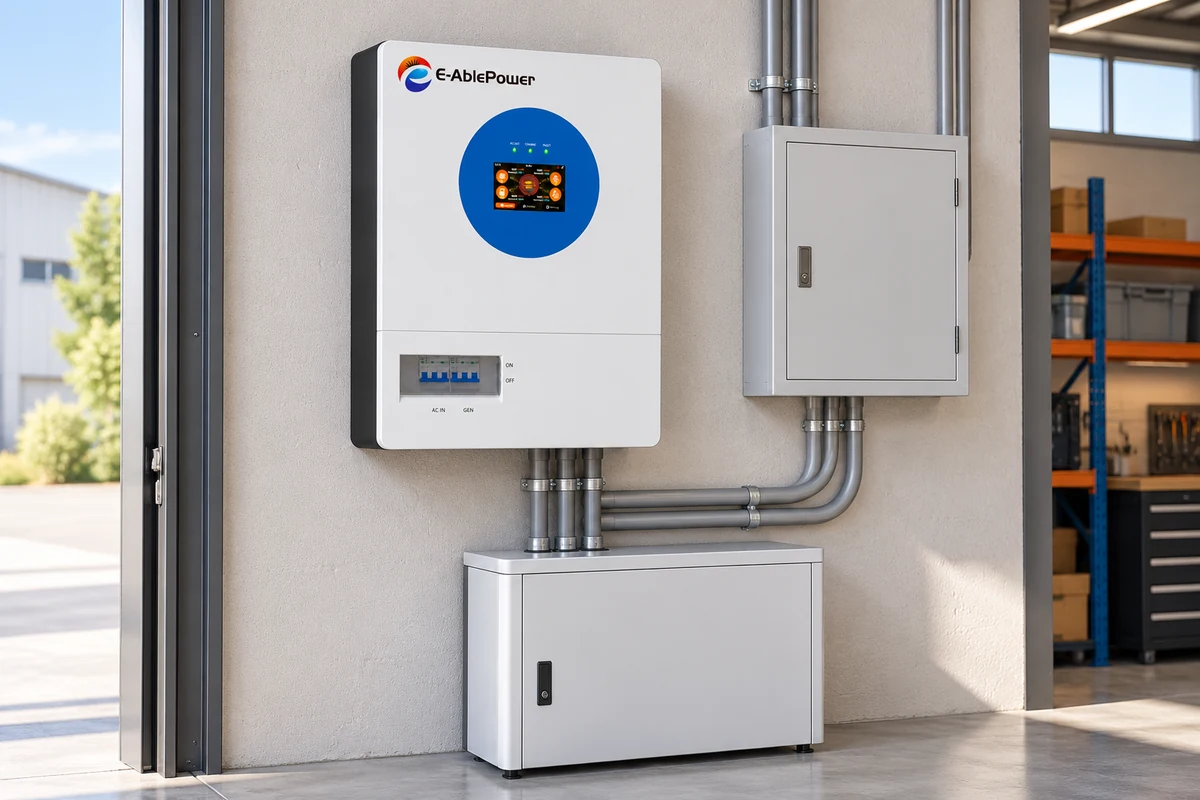
PV and battery matching
PV strings must land inside the MPPT window: 90–485 Vdc input with 90–450 Vdc tracking, 500 Vdc open-circuit maximum. That ceiling suits twelve or thirteen 40 V modules per string in cold climates where Voc rises, and each tracker accepts 12 kW at 32 A, so the array can be split evenly or sized asymmetrically across the two inputs.
The battery side runs on a 51.2 V nominal platform between 40.0 and 58.6 Vdc, charging at up to 200 A from AC and 300 A from PV or hybrid sources. One bank is shared by every unit in a parallel group, so the bank must be sized for the whole group rather than for a single inverter.
Inverter efficiency is above 91% and AC-mode efficiency above 95%, with 10 ms typical transfer to backup and variable-speed forced-air cooling at 60 dB or below. The 26 kg, 650 × 482 × 139 mm chassis is built for a wall or rack position in a plant room rather than a sealed outdoor cabinet.
Frequently asked questions
Which loads need a three-phase inverter instead of a split-phase one?
Anything wired for 208 V across three phases: pumps, compressors, three-phase HVAC, workshop machinery and elevator drives. A split-phase inverter only produces 120/240 V single-phase, so it cannot supply a three-phase motor load even when the kW rating looks sufficient.
How much capacity can one installation reach?
Up to six units may be paralleled, and each is rated 16 kW, giving 96 kW of combined output. Bypass hardware is three-pole at 60 A per phase, and generator charge current is capped at 160 A for the group's AC source.
Can the inverter take a generator directly?
Yes. The generator input accepts 3L/N/PE 120/208 Vac at 40–70 Hz and will charge at up to 160 A. Confirm the generator's voltage regulation and frequency drift against this window before committing, because a generator that swings outside it will drop to bypass.
How many solar modules fit on this model?
PV input is 12 kW + 12 kW across two MPPTs, 32 A each, with 500 Vdc maximum open-circuit voltage. String length is set by module Voc at the coldest expected temperature, not by the STC value, so leave headroom below 500 Vdc.
Is this model certified for grid connection?
No certification documents were supplied for this model. We do not claim grid-connection approval. Request the certificates applicable to your market and utility before specifying it for an interconnection application.
Related products
- Residential Solar Power Inverter — overview of the full inverter range
- Split Phase Hybrid Inverter 7.2kW 12kW — existing split-phase series
- Energy Storage Systems — battery and ESS options
Product appearance is an illustration. Specifications are transcribed from supplier datasheets and are subject to confirmation; final configuration, certification and warranty are per the signed sales contract.